8 Apr 2012


project of art evolution 02 

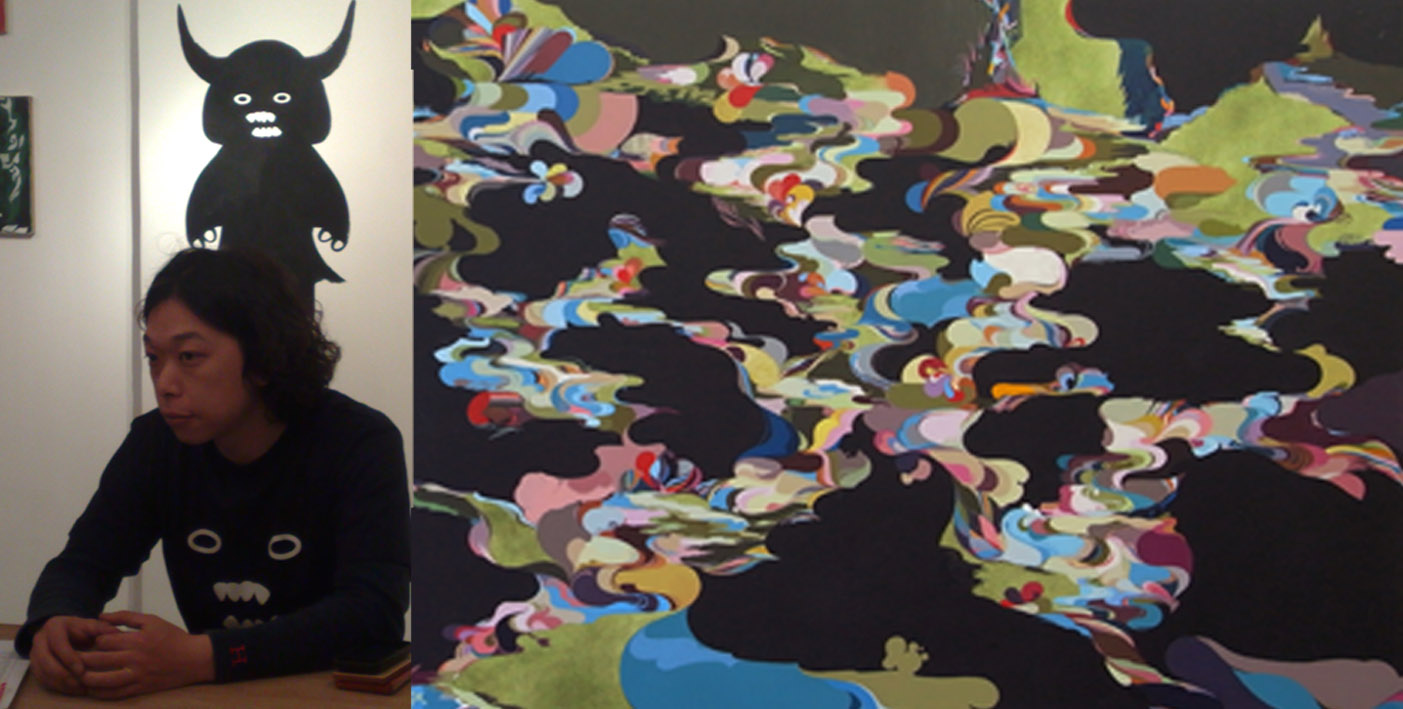
Tomoaki believes everything is forever changing day after day, forever emerging in this world, until it disappears. These changes, which take place in “this world ”, cannot be denied even if he desires to do so. This is because these changes becomes the phenomena of the world”, the place he exists. In fact, what he  wants is to actively accept the changes in his life; to enjoy the moment of changes in the world where he forms a part of it, with the hope that perhaps this will help him to develop a keener insight into this “world” of his.

With the time given to him, he hopes to encounter as many people and as many situations as possible. Even if there remains a gap between mankind that is hard to bridge, he still hope people can get to know and communicate with each other. How long can he keep changing? How deep can he go? With these things in mind, he works as an artist.

As for his artistic method, he creates a work of art mostly based on photographs and other materials which he has taken and collected for his own records. This collection of photos and materials is an accumulation of himself – of the encounters with reality that he has had, some casual, some moving. They are all pieces of  the past of himself and clues to who he is. He regards them as the Library of Tarutani. All of these photos and materials are catalogue and stored in a computer under different categories, such as date or genre.

In his desire for having an encounter with his deeper self, he creates works of art. Those things selected from the Tarutani Library, such as themes that are found in his daily life, sensibilities, sensitivities that are embraced in the unconscious (a sense of humor that helps him to enjoy chance happenings and even failures) – all these elements that constitute his consciousness are mixed together and interwoven to compose his artworks.

In his recent works, he frequently uses a method that he calls “Connecting the Grains”. It is a method that he believes is the best suited to express his image of one pluralistic universe arising from infinitely multiplying worlds with primitive and primordial vitality. 


Painter: Tomoaki Tarutani

Untitled / 2010 / 

Technique: Mixed media on paper mounted on panel 15 x 20 cm 

Fashion Designer: Meiyi Cheung 
Skirt: digital print on silk cotton
Model: Myra Tang

 Head piece artist: Tricia Flanagan
 Material: felt, feathers, wood, crewel embroider

 thread.Technique: Steamed, moulded and stitched

7 Apr 2012

project of art evolution 01


Painter Viwa 比巴

Viwa wants to recreate the modern version of decorative arts and their composition from the Edo Period. His works are inspired from the paintings on the traditional folding screens - byobu, and the traditional sliding doors - fusuma, primarily served the purpose of decoration, and that the role of the images and patterns on the surface, represented the method of déformer, is to provide a contrast in order to bring out their decorative function. He believes that, aside from serving as a medium of expression for the artist, paintings can also play a decorative role.His goal is to create unique images by reproducing history while at the same time incorporating modern elements such as street culture and graffiti into the design. By examining the historical era in which decorative arts flourished and their roles in that historical context, he hopes to present the role of art in the world today as well as the direct link between the modern world.


garment: digital print on 100% silk chiffon
model: Kara E.
 Fashion Designer Meiyi Cheung

Meiyi believes fashion is not just for chase and grab. It is a piece of delicately crafted art piece that goes with the form, sensation and motion of human body, presents to the rest of the world who we are. While clothes serves as our protection gear against nature, fashion turns us into a piece of walking art.  

Each season, Meiyi collaborates with artists from different discipline. Use fashion as a tool to develop the 2nd life of the artist's work. She uses textile, elements of trend and outfit silhouette to address the beauty of the original work.

Meiyi turned Viwa's painting into one of her six fashion theme- the element of women, vigour. She saw the lines and movement of the pattern and color usage symbolizes the inner energy of modern women, splendid and continuous.


material: cardboard, colored paper, 
wooden dowel
technique: laser cut and lamination

Head piece artist Tricia Flanagan 傅織女

To Tricia, 'Vigour' draws on the landscape of the body. The topographic    mapping is not eroded as a usual landscape would be - worn down from the weather, on the contrary the shapes evoke an upward energetic movement like splashing water, reflects the vigorous lifestyle of nowadays women.


29 Mar 2012


Does ORDER exists in the world of aesthetic? Or with its absence,  a new world of beauty is created.

23 Feb 2012

When fashion is more than wearable.

Fashion reflects the human mind of the time. When we, as a designer, have the freedom to rethink why fashion is stitched and sewn, we  also have the brave to explore alternatives.


WHOSTHAT 2012 FW collection by Meiyi Cheung


11 Aug 2011

Recall of Japanese femininity in Masato Shigemor's paintings.


Left:   Sabio / 2011 / Acylic on canvas
Right: Spotsign / 2010 / Acrylic on canvas

When I first saw these 2 paintings in the opening of "Ever-lasting Nature, Ever-changing nature" Exhibition. It recalls me the beauty of ancient femininity, the power of ornament and pattern. When we have been believing in Less in More for a long time, are we missing something used to be part of our history.

10 Aug 2011

The beauty of plenty

Hirata Akio exhibition design, Tokyo

by Japanese design studio Nendo
Growing vases

by Japanese design studio Nendo,
for the Czech lighting company Lasvit at the Salone del Mobile.

9 Aug 2011

Without human body, does fashion exists??


Top:       Paper shoes.  
Middle:  Silver boats.
Bottom: White skelletons.


All artpieces by Violise Lunn, Denmark 


get inspired...

Untitled; photographed by Meiyi, 2010             Infra-onctuosites, Installation , 2008 by Doriane Souilhol